Baby Cows, a Baby Bear, and a Beautiful Bride

This vacation has been so packed with fun that my head is swimming. Or is that the heat and humidity that is making my brain fuzzy?

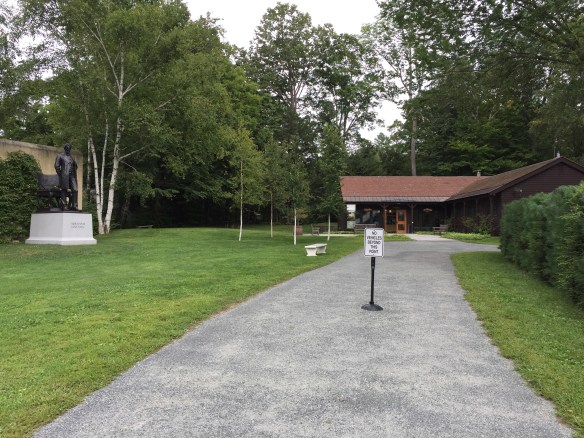
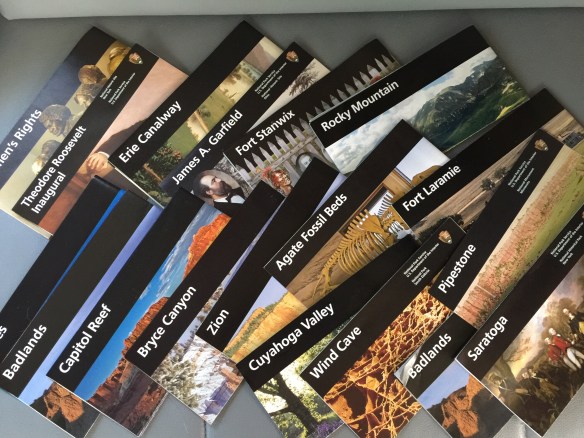
While in Vermont, and while the tent was going up and my-sister-in-law baked 19 wedding cakes (or was it 13?), I got some more stamps on my National Parks Passport. 35 minutes south of my brother Tom’s house, I toured the Saint-Gauden National Historic Site. S-G was a talented sculptor who specialized in bronze-casted, life-sized statues of important people like Abe Lincoln. The NHS was his home and gardens.

More fun was driving through the covered bridge each way. Ramsey is 9’3″ tall, the limit, so I stayed in the middle of the bridge. A local I met later at an ice cream stand told me this bridge is the longest covered bridge in North America.

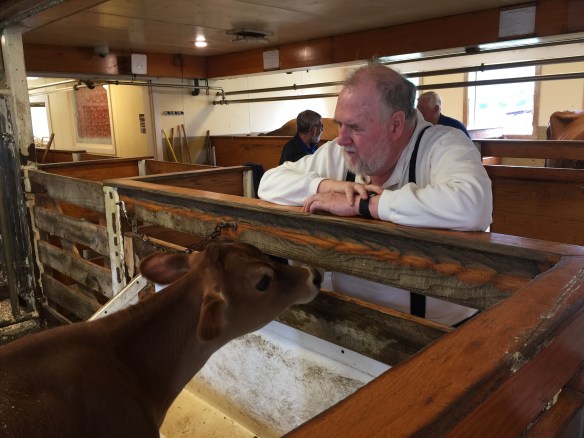
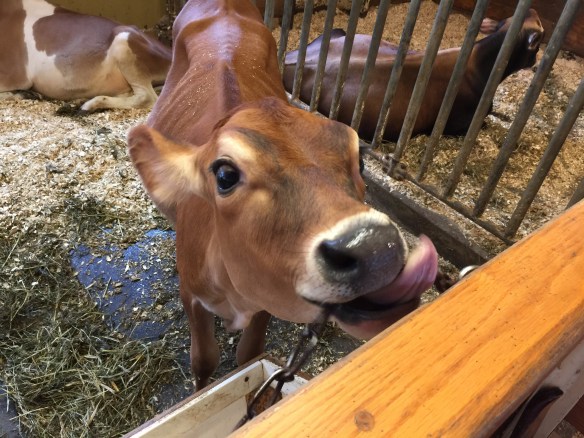
By the following day, my other brother, Charlie, and his wife Paula had joined the menagerie. They accompanied me in visiting the much more lively Marsh-Billings-Rockefeller National Historic Park. The site includes a working dairy farm — all gold-colored Jersey cows. The best part is the nursery for the little calves. I took a ton of videos, which I’ll insert in my YouTube summary of this trip. For now, here is another still shot.

They had a terrific museum about local farming and a well-done movie about George Perkins Marsh (1801-1882), who first established the estate, Frederick Billings (1823-1890), who bought the estate from Marsh in 1869, and Laurence Rockefeller (1910-2004), who married Billings’ granddaughter Mary French.

The men never met each other. The most important thing they had in common is that they were conservationists. The grounds and house are lovely, but not as fun to see as the cows.

The wedding of my niece Megan to Tom of NYC (yes, another Tom in the family) went off without a hitch. No rain, a huge blessing since it interfered with the wedding of Megan’s parents, Tom and Marguerite, on the same knoll 32 years ago. A haze blocking the sun kept it from being too hot.

After bagels at my brother’s house and goodbyes to Megan and Tom, due to return to Thailand the next day, I headed south. It was Labor Day. I stayed in a charming RV Resort by a stream, where I was able to catch up on my laundry. (Not in the stream.) The highlight of the night was a small bear who lives nearby, raiding their dumpster at night. Apparently, there is no mommy bear anywhere.

He spent a lot of time relaxing on a large boulder across the stream from Ramsey, but not that far. He watched me with lonely eyes and I wished I could feed him but knew better.

My task for today, Tuesday, through Friday, is to visit the final 20 monuments on the Henry Knox Trail. I’ll visit five each day, ending in Cambridge. In general, the trail follows Route 20 as it crosses Massachusetts from West Springfield.

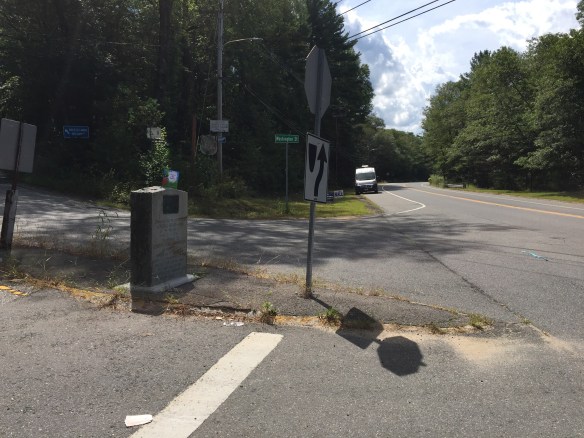
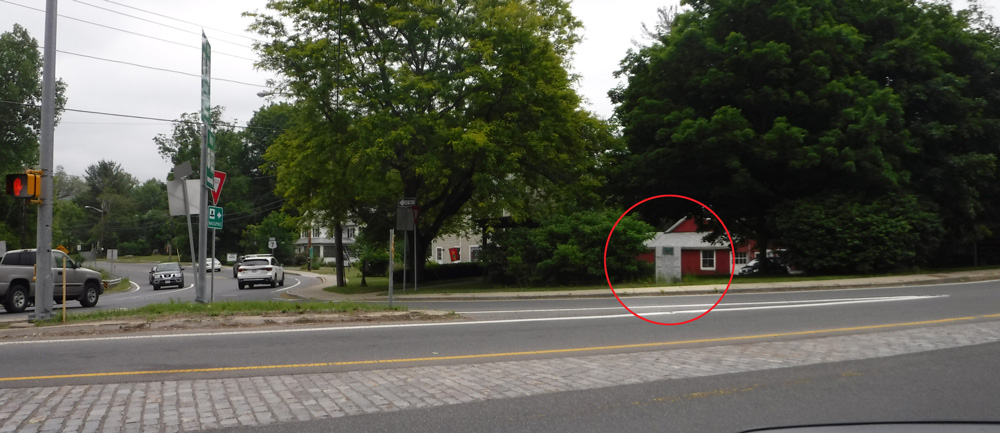
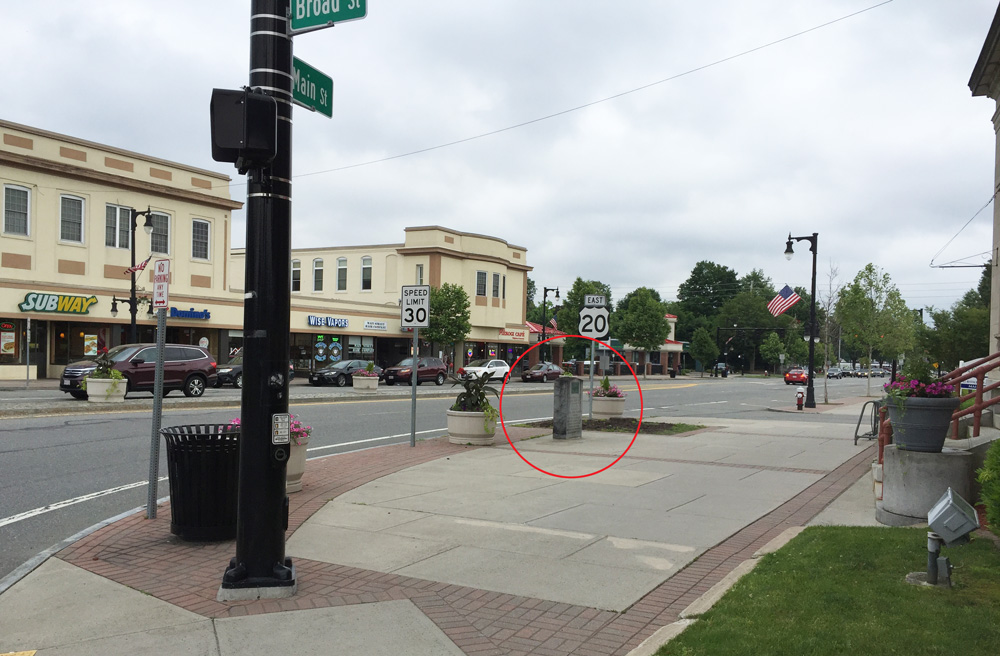
Today I first found West Springfield’s monument.

Then Springfield’s. The monument is in front of the National Armory NHS (also started by Henry Knox), so I toured that, too, and got another stamp on my passport.

Then Wilbraham.

Then Palmer.

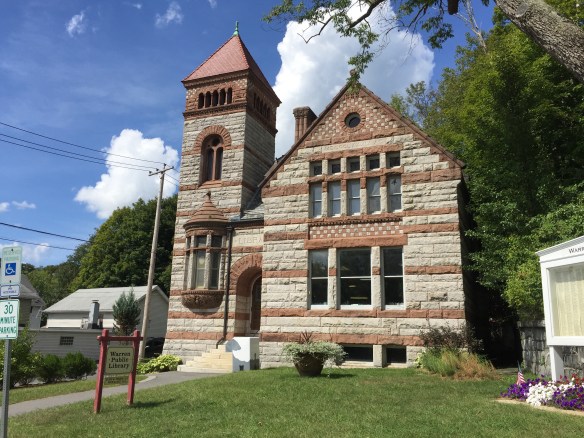
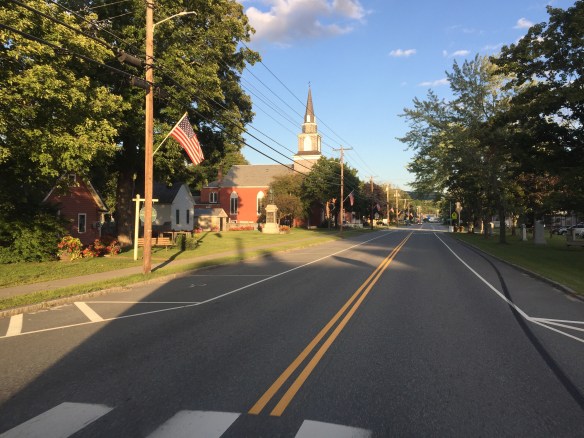
Finally Warren.

After finding each monument, I took a photo of it, then drove to the local library and donated a copy of Henry’s Big Kaboom to the children’s department.

The Most Charming Library of the Day Award goes to the Warren Library.

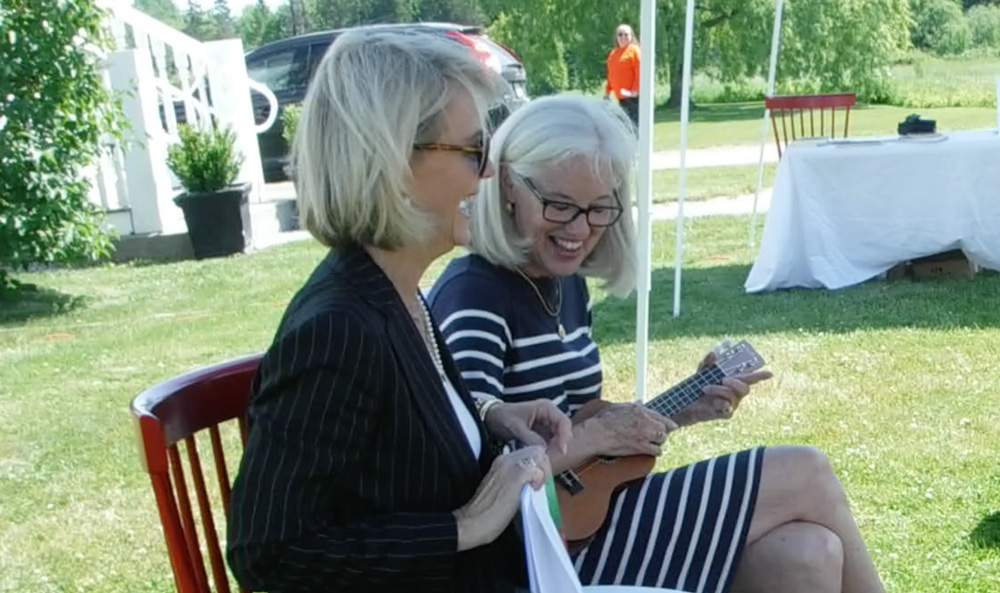
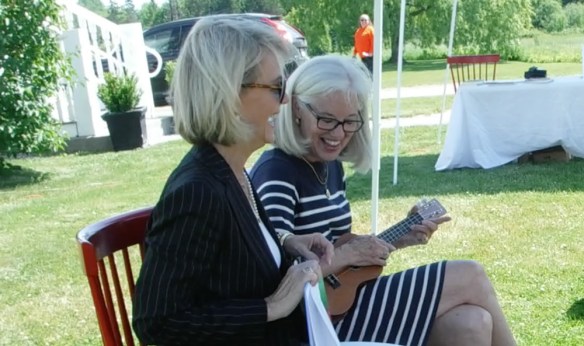
I had written ahead to the libraries, so they expected me. Palmer (today) and Northborough (Thursday) asked me to perform with my ukulele. I like doing that. My goal is to educate the towns along the route so that in 2026 when the Train of Artillery is reenacted to celebrate our nation’s 250th birthday, the residents will actually know what’s happening.

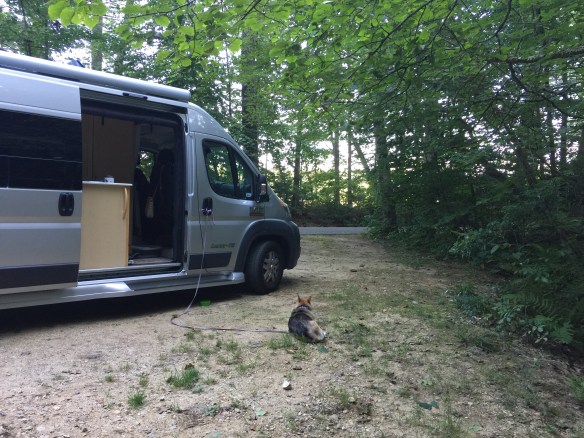
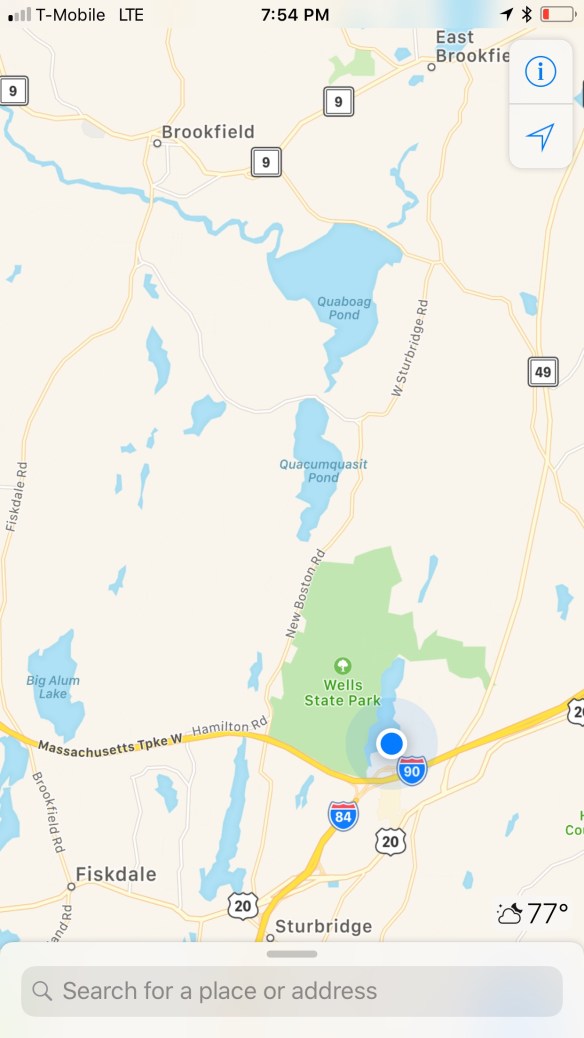
Tonight I am at Wells State Park not far from Brookfield, Mass, where I start up again tomorrow. Too bad I don’t have time to see nearby Sturbridge Village.

Made It to Vermont

15 days from departing Pasadena, California, I drove into gorgeous, Vermont, where my niece is getting married on Sunday. It’s Labor Day weekend. She and her betrothed are here at her parents from their own home in Thailand. The family is gathering from all over.

USA Swing Statistics So Far

I traveled through 16 states to get here.

I toured 8 National Parks, 4 National Historic Parks, 4 National Monuments (5, if you count Scott’s Bluff, which I saw from a distance), 1 National River and Recreation Area, 1 National Historic Site, 1 National Heritage Corridor, and crossed over 1 National Historic Trail. My National Parks Passport has all sorts of cancellation stamps in it.

I spent 4 nights in RV parks, 5 nights in state parks, 1 free night in a rest area, 1 free night boondocking on public land, and 3 nights parked in front of relative’s homes.

I stopped for gas 29 times. The most I spent for gas was $3.49/gal in Bryce Canyon NP, and the least was $2.69/gal in Minnesota.

My favorite campground was Fort Robinson in Nebraska, and my favorite food was the beef with barley soup I bought take-out from their restaurant.

Best of all, I’ve made 4 new fellow-RVer friends!

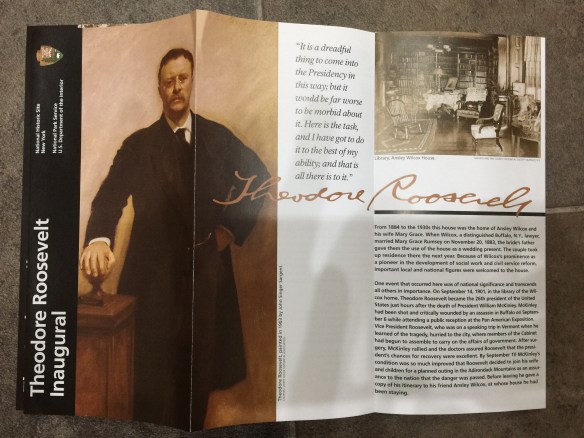
Since my last post, and before leaving Buffalo, I stopped briefly in the Theodore Roosevelt Inaugural National Historic Site. It was the home of Ansley and Mary (Grace) Wilcox on September 14, 1901, where Teddy Roosevelt was staying when he learned that President William McKinley had died. McKinley had been shot by an assassin in Buffalo eight days earlier on September 6. Teddy was sworn in as the new president in the library of the house (now part of HIS National Parks) four hours after McKinley’s death.

Annie was waiting in the car, so I took a quick look around, collected the brochure, and stamped my passport.

About an hour and a half hour northeast, I reached the Women’s Rights National Historic Park in Seneca Falls, which is also along the route of the Erie Canalway National Heritage Corridor.

As it states on the placard, this is the only National Park dedicated to a movement. I was allowed to take Annie with me on the walk around Elizabeth Candy Stanton’s home.

We peeked in the windows.

And we walked to the Seneca River below, which was, in Stanton’s day, part of the canal system.

The Visitor’s Center is across the river in the old industrial town of Senaca Falls, named after the Senaca Indians who once lived there. But, as you can see from my dashboard , it was 98 degrees out. (You can also see that Ramsey passed his 20,000 mile mark.)

Dogs are not allowed in the National Parks Visitor Centers, so with the car still running and air conditioner blasting, I dashed into the center to stamp my passport, collect the National Park brochure, and snap this photo of a tour going on that I had to miss. You can barely see the ranger guide behind the suffragettes.

I drove through the next town over from Senaca Falls, Waterloo, to see (through the van window) the homes of Mary Ann M’Clintock and Jane Hunt. Annie wasn’t welcome in the Waterloo Memorial Day Museum either, so we skipped that in favor of a chocolate mint ice cream cone.

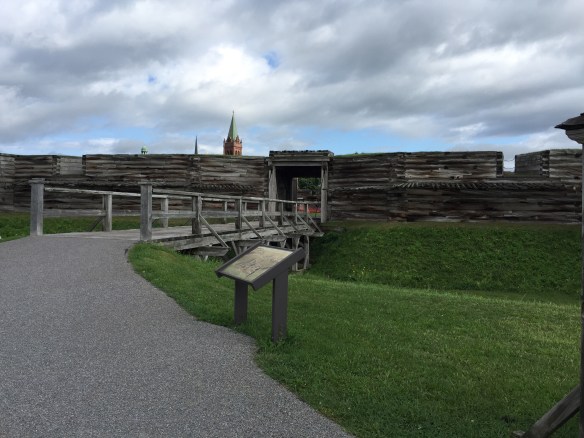
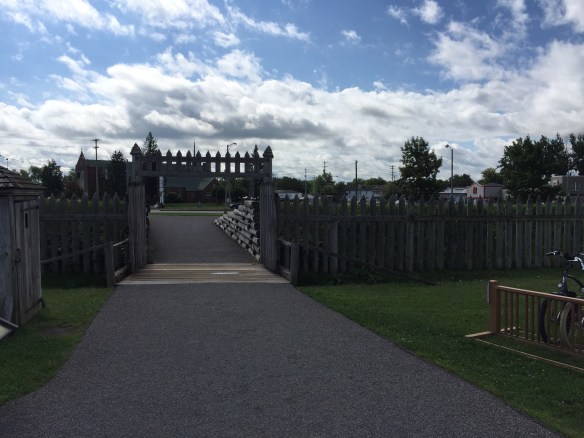
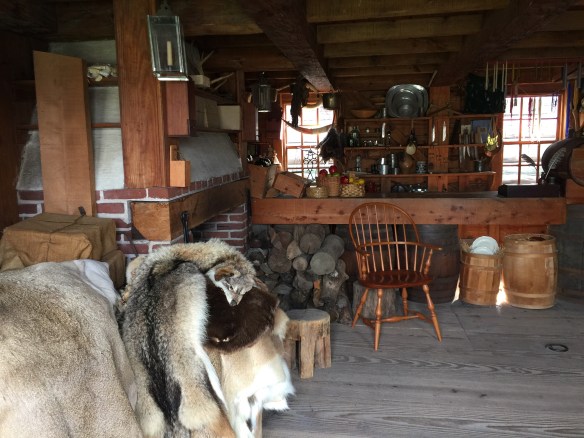
Then traveling I-90, which follows the Erie Canal as it heads to Albany from Buffalo, we headed to Fort Stanwix National Monument. The fort used to guard the stretch of land between Lake Ontario and the Hudson River, waterways important from the earliest fur trading days, and even before by the American Indians. Traders used to carry their canoes and other boats from the lake to the river, hence the land was considered a portage. Eventually the city of Rome, New York, grew around and over the fort. Like its namesake, all roads led to Rome, and it was the center of the Empire (State).

110 miles due east, I arrived at Saratoga National Historic Park on the corridor of the Hudson River. I had driven past it last June when I followed the Henry Knox Trail. Henry’s Train of Artillery passed by Bevis Heights, where the park is, in December 1776. The Battle of Saratoga, during which Benedict Arnold took a lead role, occurred in September 1777. The park consists of the visitor center and the battlefields. The road through the latter was closed for repair. Missed that. But it was cool enough to leave Annie in the van so I could watch the movie about the battles and see the exhibits in the visitor center.

A five-year-old boy overheard me ask one of the rangers if many visitors to the park were also following the Henry Knox Trail. The boy ran to his parents who then informed me that the lad was a huge fan of Henry Knox. The family was indeed in the middle of following the Henry Knox Trail (even using the same guide I used in June from the Hudson Valley Foundation), had visited the Henry Knox Museum in Thomaston Maine, and bought my book. The young boy has been driving his parents crazy with the Kaboom chorus just as my four-year-old grandson has been driving his parents crazy.

How fun to have a fan!

I gave a copy of Henry’s Big Kaboom to Saratoga NHP. Who knows? Maybe they will add it to their bookstore.

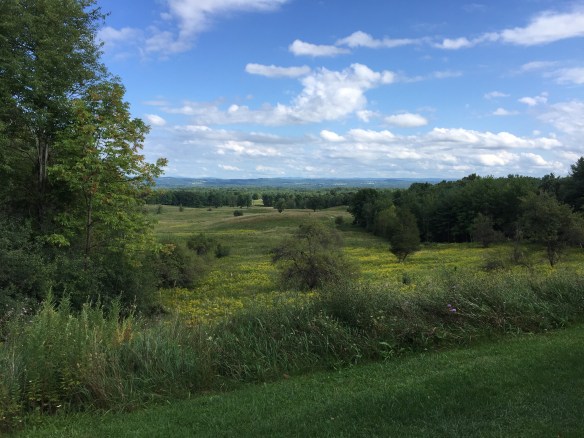
Here is the view of the battlefield. Beyond that is the Hudson River, and beyond that are the Green Mountains.

I made it to my brother’s in Vermont in time to interrupt dinner with the in-laws-to-be. I parked Ramsey across the street on the lawn of an abandoned house, made myself a bean and cheese quesadilla, and opened my last Corona. What a great trip it has been had so far.

Pokagon and Cuyahoga

As I write, I’m parked in front of my baby brother’s house in Buffalo, where I spent the night. Trouble is, my brother is missing. He and his wife were delayed in Toronto so I won’t catch up with them until the wedding of our niece this weekend. Now to this blog.

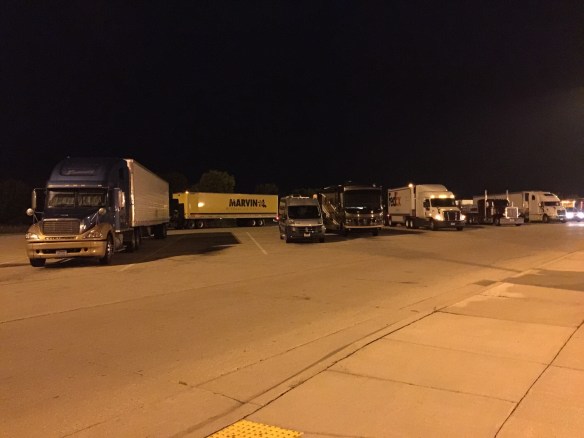
After leaving my rellies in Minnesota, I spent a free night in a Rest Area in Wisconsin. Here is Ramsey parked between the Big Boys.

From there I headed toward Chicago. I followed a brief wild goose chase by seeking out a Riverside Cemetery just outside the other Windy City, where I thought my great-grandfather was buried. Lesson learned – copy genealogy notes more carefully. After learning no Knowlton Ames was buried there, I did some Googling with my cell phone and learned he was buried in Rosehill Cemetery. Since that meant backtracking, and I had 1000+ miles ahead of me before the weekend, I pushed on.

In the northeast corner of Indiana, I spent a beautiful, star-covered night in Pokagon State Park. I was one of only three guests.

Then I drove into Ohio, where I found Cuyahoga Valley National Park. It is just south of Cleveland. Whereas Arches NP is known for its rock formations and Rocky Mountain NP is famous for its 12000-ft-high drive, this NP is meant to preserve the history of the era of the Erie Canal. The hour or so drive up the valley follows an old canal, now mostly grown over, and the towpath, now manicured as a hiking or biking trail. Fun to see was the old lock.

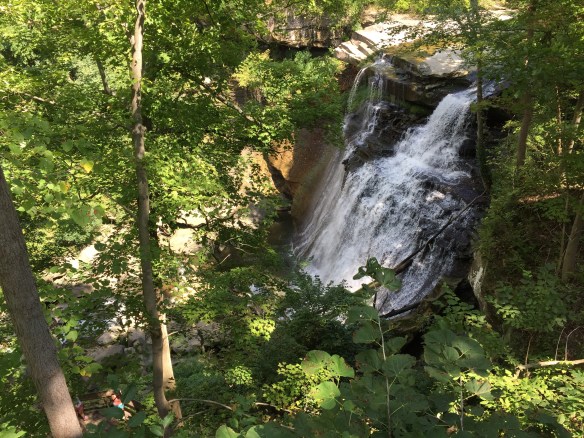
Cuyahoga Valley NP is also known for its waterfalls. Brandywine is the most famous (photo above). Arthritic Annie was allowed to walk the boardwalk trail with me.

I had to carry her back up the stairs, poor girl.

Today we scurry through upstate New York.

I’m in Wisconsin

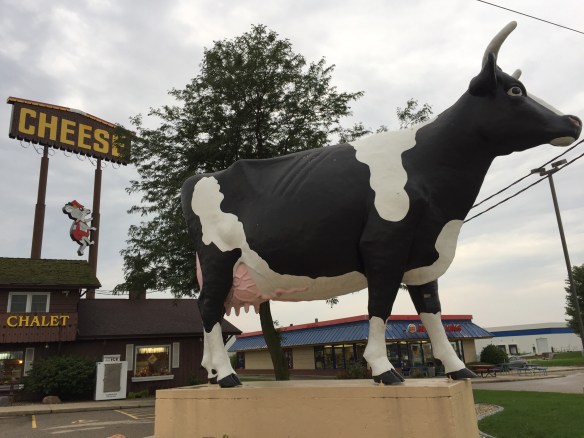
It is stormy and green here in the cheese state, but gorgeous.

Since my last post, I spent a peaceful night by the lake at Split Rock Creek State Campground just east of the Minnesota border – the best site for a night in Ramsey ever.

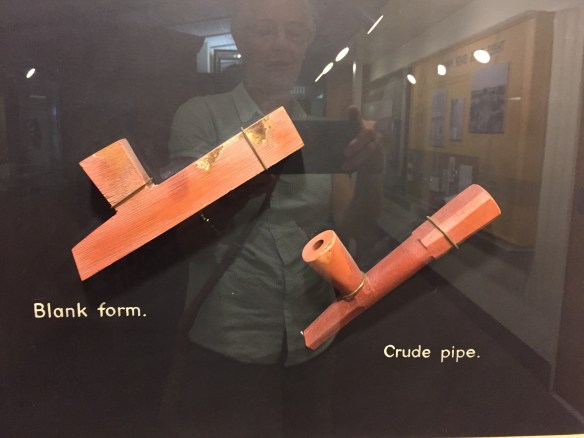
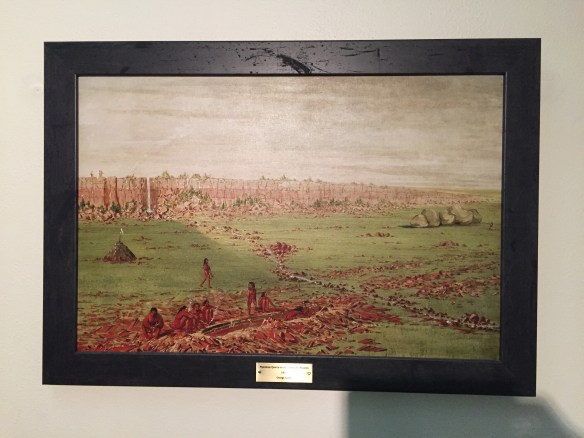
About 15 minutes up the road, I toured Pipestone National Monument, where American Indians have mined the red stone used for peace pipes for as long as their oral tradition remembers. The red stone is thought to contain the blood of their ancestors, hence a very spiritual stone.

This reproduction of a painting by George Caitlin shows the mines in the middle of the prairie in the mid 1800s.

Then I dashed through corn field after corn field to St Paul on the other side of Minnesota to visit my third-cousin-once-removed, Leila. She turns 94 this Thursday. I spent two nights in a real bed.

On Saturday, we toured Grand Hill, where her side of our family lived for four generations, and where my paternal grandmother spent her childhood. The current owner of 501 Grand let us look around.

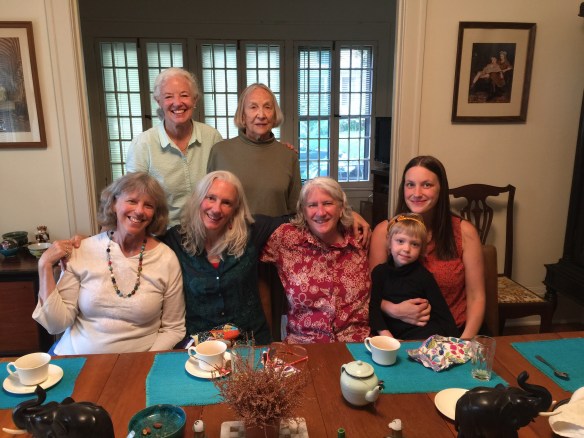
This morning, more of my third cousins gathered for breakfast. Here are four generations of Ameses.

Next destination, Cuyahoga Valley National Park in Ohio. I must drive through Illinois and Indiana first. I’m due in Vermont for the wedding festivities for my niece on Friday.

Wind Cave and Badlands National Parks

I’m on the 10th day of my 6-wk Swing Around the USA, which I should probably rename “Zoom Around the USA.” On travel days, I’m driving between 215 and 297 miles a day, not counting the first leg from Pasadena to Zion, which was 433 miles. I’m paying between $2.77 and $3.59/gal for gas depending on how remote I am. I thought I would boondock more, but so far I’ve had only one free night. The free view over the Grand Staircase Escalante National Monument was amazing, but I wasn’t very comfortable with the isolation. Feeling less brave, I look first for state park campgrounds, which are gorgeous and inexpensive ($12 to $24 so far), then RV Parks ($33 to $45). I’ve only had to dump my tanks once. I prefer my own coffee to anything I can buy out and eat lots of fruit and granola for breakfast. In order to eat plenty of veggies, I cook most of my dinners. Cooking and eating outdoors is a nice thing to do at the end of a day of driving and sightseeing.

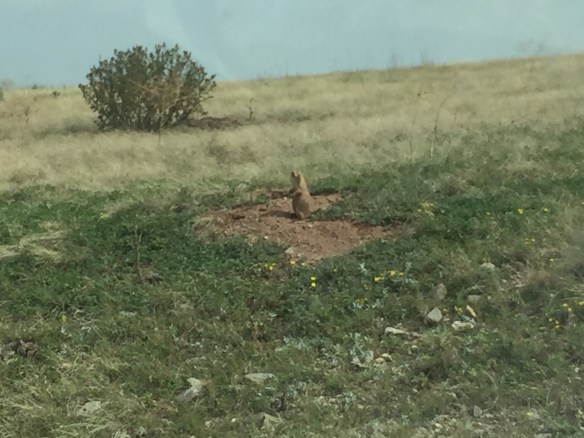
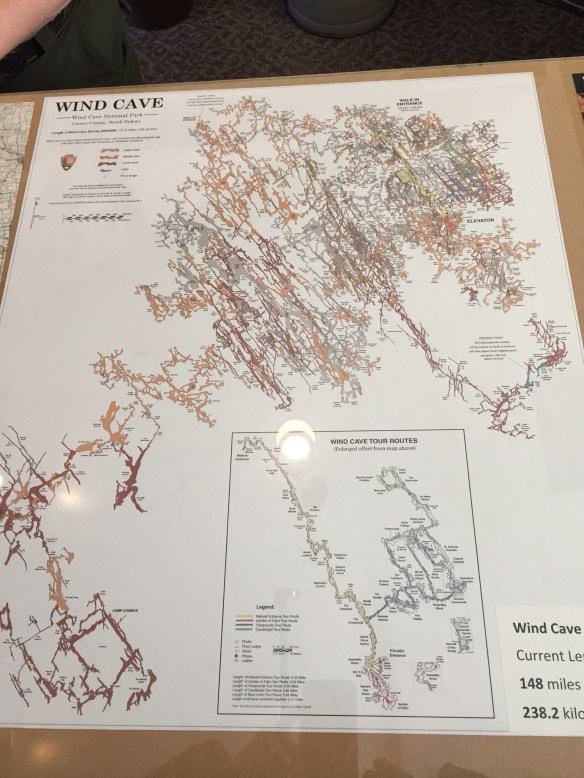
Yesterday I started with Wind Cave National Park in South Dakota. It offers two highlights: The “Park” itself is a calming, preserved prairie complete with buffalo and prairie dogs.

Under the park, like a subway maze, is one of the world’s most complicated and extensive natural caves. The native Americans thought it was the Source, where buffalo came from. 436 miles have been explored so far by daring people who like crawling through dark, tiny spaces. In the 1800s, all they had were candles to guide them in, and string to lead them out. It’s thought only 20% of the network has been seen so far.

Though I overcame my fear of heights to drive the 12000-foot-high trail over Rocky Mountain NP, my even worse claustrophobia and the excuse not to leave Annie in the car too long (there was an hour wait for the Cave tour and the tour itself takes an hour) led me to the 20-minute movie in the visitor center auditorium.

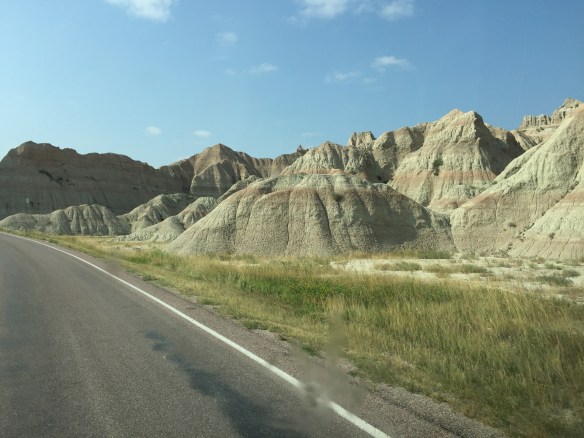
To get from Wind Cave NP to Badlands NP, also in South Dakota, I wiggled through the pine-covered Black Hills in Custer State Park.

Like every National Park I have seen so far, Badlands offers sights you can’t see anywhere else in the world. The 45-mile drive through the canyons of its white mountains kept me saying “WOW”.

At the end of the drive is a campground but off limits to rigs over 18 feet. Ramsey is 20.5 feet. However, not much farther down the road is a tourist spot I’m glad I didn’t miss. The little town of Wall has two RV Resorts. The reviews on the app AllStays, which I frequently use to find places to park, praised Sleepy Hollow RV Resort, which is where we are now.

It’s very nice and friendly, and only a short walk away from the real highlight of this town, Walls Drugs, a super touristy mall of shops offering everything from cowboy boots to ice cream to BBQ beef sandwiches to silver decorate rifles.

I now have two days to get to St. Paul, Minnesota. My National Parks map says that Pipestone National Monument is about halfway.

Wyoming and Nebraska

I made it through the Mohave Desert without melting and toured Zion, Bryce Canyon, Capital Reef, Arches, and Rocky Mountain National Parks with my jaw dropped in awe — snapping photos all the way. I then downloaded the pix to my computer. But none of the gorgeous campgrounds have wifi that allows for me to upload the pix from my computer to this blog, so I’ll recap those days with videos when I get home. Here’s one of Bryce that escaped the download.

And this one of Ramsey my second night. I boondocked overlooking the Grand Staircase Escalante National Monument. Boy, was that sunset spectacular!

Today I visited Fort Laramie (the covered wagon) and the (in most cases cast copies of) 19-million-year-old bones of Miocene period animals on display at Agate Fossil National Monument in Nebraska, from where the bones were excavated.

The drives between each destination have been equally exciting. Even these vast expanses of prairie.

Now Ramsey is hooked up at campsite number 67 at Fort Robinson State Park near Crawford Nebraska amidst a gaggle of vintage camper trailers owned by Sisters on the Fly. (12000 women members who meet up for fun events all around the country. Eighty will be here this week. I took a tour of their cute, theme-decorated trailers. Check them out on YouTube if you have never heard of them.) My silver spaceship seems quite plain in comparison.

On to Wind Cave and Badlands National Parks tomorrow. I’m due in St Paul MN Friday night.

Back to rambling. …….

Mission Accomplished in Pasadena

Pasadena-sm

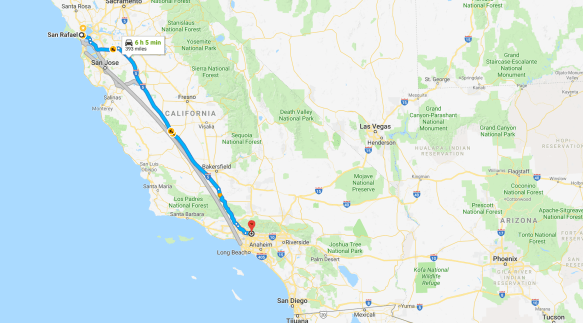
It’s roughly 400 miles from Marin County to Pasadena, a trip I take nearly every month because my daughter and two of my grandsons live there. To pass the time on the boring, straight, Interstate 5, I watch YouTube videos. Yes, it’s safe. The iPhone is propped up at eye level and I watch things that require more listening than looking. I’m addicted to the videos about Tiny Houses. I don’t know why except that I’ve always been interested in architecture, fitting things into small spaces, and living minimally.

Map San Rafael to Pasadena

Not only did I want to see my family before departing on a six-week road trip across the country, but I wanted to deliver to them their dog, Basil (pronounced like the name Basil Rathbone). He had been with me for a couple of months while his family was on vacation.

Basil was happy to be home, and I had a great time being Nanna. The LA Zoo is a lot of fun to see through the eyes of a four-year-old.

zoo

Tomorrow I drive through the tough part, miles and miles of lonely desert. I take the same road east toward Zion National Park that I took a few months ago heading west from Death Valley National Park. The desert has its own beauty, but driving through it can be hot and tedious. YouTube may not be an option if my cell service doesn’t work.

BTW. Before I left home, I upgraded my AAA membership to ‘premium,’ just in case Ramsey breaks down far from a service station.

Map Pasadena to Zion NP

The Henry Knox Trail 3-Part Video Series

Haven Younger and Mary Mitchell singing the chorus of Henry's Big Kaboom

Haven Younger and Mary Mitchell singing the chorus of Henry’s Big Kaboom

Hi. I find many of you prefer to watch videos than to read through blogs, so I’ve put together a three-part series about my trip to New England I hope you will enjoy.

Part I is my visit to Fort Ticonderoga in New York and a snippet of my performance of Henry’s Big Kaboom for the children.

Part II starts with finding New York Marker No. 1 of the Henry Knox Trail in Ticonderoga and following the rest of the markers through Albany, over the border into Massachusetts, and on to Westfield. That took three days. I then had to dash to Thomaston, Maine for the ‘Boom’ event. I will finish the trail from Westfield to Cambridge in September when I return to New England for my niece Megan’s wedding.

Part III shows my visit to the Henry Knox Museum aka Montpelier. Imagine what it’s like to view a place that, even though a replica of the original, is where your ancestors lived for three generations. As evidenced by the streets named after my 5x-great-grandparents (Knox St, Thatcher St, & Flucker St), they also established the town. I performed my Henry ballad a second time and met third cousins Amy MacDonald and Charles Fletcher (fellow Knox descendants) I’d never met before. Thrilling. After working hard to update our family tree and connect with my family, it was also very emotional.

Part I

Part II

Henry Knox Museum, Thomaston, Maine – Book Launch Part 2

Mary Mitchell singing Henry's Big Kaboom to children at the Knox Museum in Thomaston, Maine. Her cousin Haven Younger served as the official page turner.

Mary Mitchell singing Henry’s Big Kaboom to children at the Knox Museum in Thomaston, Maine. Cousin Haven Younger served as the official page turner.

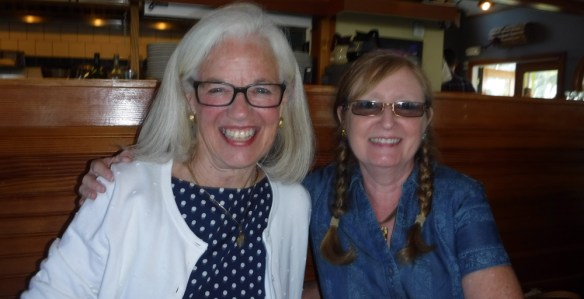
Important things first. My cousin Haven Younger flew all the way from Napa, California, where she had been vacationing, to Maryland, where she lives, changed suitcases, and, on the next morning, flew to Portland, Maine to join me in Thomaston for the second round of my book signing adventure. I hadn’t seen her in ten years.
Haven Younger and Mary Mitchell singing the chorus of Henry's Big Kaboom

Haven Younger and Mary Mitchell singing the chorus of Henry’s Big Kaboom

Equally important, third cousins Amy MacDonald and Charles Fletcher, whom I had never met, and only came to know as a result of this genealogical adventure, joined our event from their nearby homes in Maine.

Third cousins Amy MacDonald, Mary Mitchell, and Charles Fletcher on the steps of the Henry Knox Museum.

Third cousins Amy MacDonald, Mary Mitchell, and Charles Fletcher on the steps of the Henry Knox Museum.

Through my membership in the Daughters of the American Revolution, I found Mary Kay Felton, who is the regent of the Lady Knox Chapter of the DAR as well as a director of the Henry Knox Museum (known as Montpelier) in Thomaston. Mary Kay invited me to read/sing my book and have a book signing during the museum’s “Boom” event about Revolutionary War Artillery. Henry’s Big Kaboom fit right into their theme.
Mary Mitchell and Mary Kay Felton on the eve of the Boom! event at the Henry Knox Museum

Mary Mitchell and Mary Kay Felton on the eve of the Boom! event at the Henry Knox Museum.
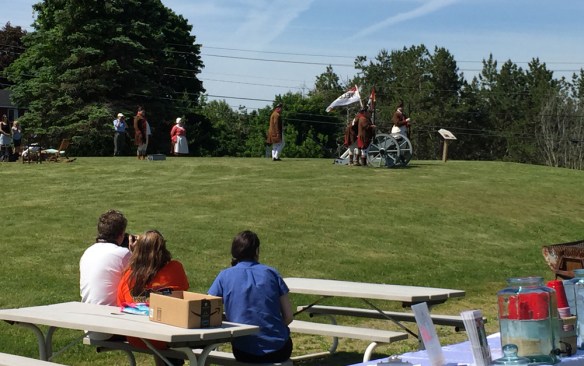
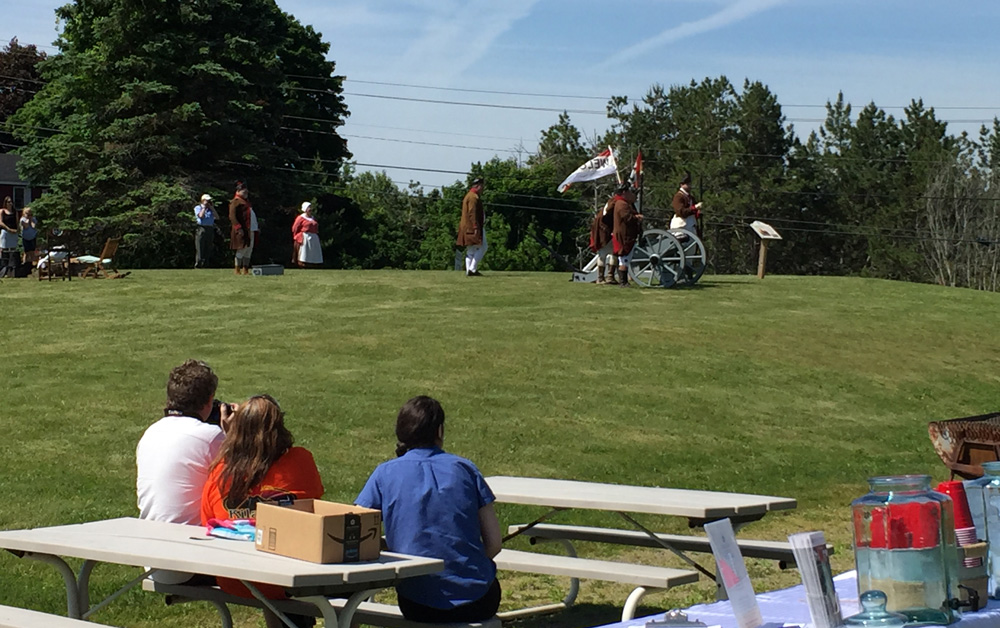
Cannon fire demonstration during the Boom! event at the Henry Knox Museum.

Cannon fire demonstration during the Boom! event at the Henry Knox Museum.

I had visited the Knox Museum in 2006 when I first learned I was a Knox descendant. I was disappointed that the family tree of Knox descendants that hung on their wall did not include my great-great-grandfather, Charles Gordon Ames.
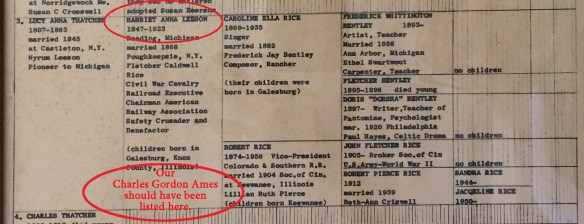
Family tree at the Knox Museum missing Charlie.

Family tree at the Knox Museum missing Charlie.

Charles had been an illegitimate child. He was the son of Lucy Anna Thatcher, who was the daughter of Lucy (Knox) and Ebenezer Thatcher. Lucy Knox Thatcher was the daughter of Henry and Lucy Knox. (A stack of family letters that is now in the Schlesinger Library at Radcliffe College proves this.) During the time Lucy Anna was pregnant with Charles, it was socially unacceptable to be an unwed mother. She gave him up to foster care. The foster parents gave Charles his last name Ames. No one yet knows with whom Lucy had her pre-marital affair, so we don’t know what Charle’s father’s last name was. However, as mentioned in an earlier blog post, new DNA results have given us a lead. (To be continued on a later blog post.)

Charles’ existence was kept a secret for a very long time, especially in the Knox family. When I learned I could launch my book at the Knox Museum, I made it my mission to add Charles Gordon Ames and his descendants to the wall. In the process of updating the family tree (see a previous blog post), I got to know, via emails and phone calls, many third cousins including Amy MacDonald and Charles Fletcher (shown above).

Amy MacDonald is also a children’s book author. She brought her books and read two of them. Little Beaver and the Echo and Rachel Fister’s Blister.

Amy MacDonald reading Little Beaver and the Echo. Haven Younger helped turn pages again.

Amy MacDonald reading Little Beaver and the Echo. Haven Younger helped turn pages again.

The museum is a 98% re-creation of the original Montpelier that, until the 1930s, overlooked the St. Georges River in Thomaston. The original was built in 1794. Thomaston has a long colonial history. Montpelier stood where explorer George Waymouth, back in 1605, surveyed the river in search of places for future British colonies.

Original mansion built by Major General Henry Knox and his wife Lucy Flucker Knox.

Original mansion built for Major General Henry Knox and his wife Lucy Flucker Knox.

When Henry died, his daughter Caroline inherited the estate. When she died, her sister (my 4x-great grandmother) Lucy inherited the estate. She left her son Henry the heir. Henry Knox Thatcher wanted nothing to do with the maintenance nightmare. He sold it and the furniture at auction. The house went to ruin.

The Henry Knox Mansion let to ruin.

The Henry Knox Mansion let to ruin.

When the railroad was built through Thomaston, the house had disintegrated beyond repair. It and all but one of the nine outhouses, an old brick farmhouse, were torn down. The railroad turned the farmhouse into the Thomaston Train Station. Now it is the Thomaston Historical Society. The society’s director Susan Devlin kindly showed me around even though the building was technically closed in June for repairs.
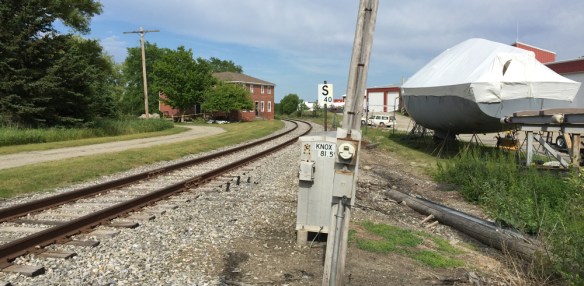
Thomaston Historical Society

Thomaston Historical Society in what was once an outhouse of the Henry Knox mansion.

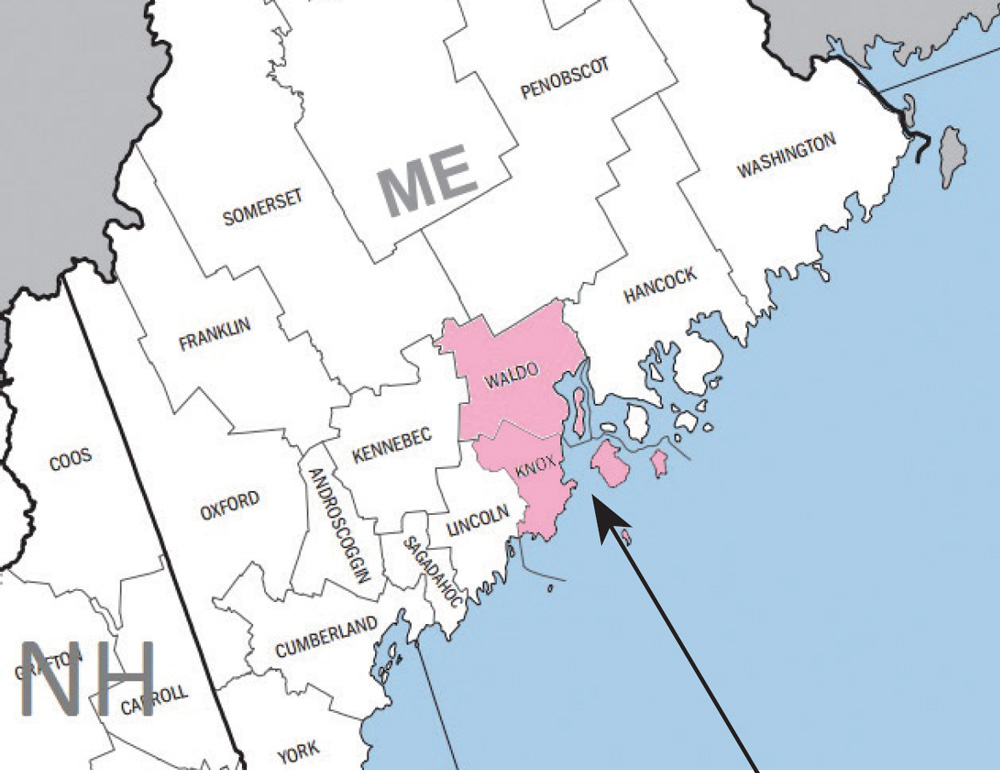
The land on which the original Montpelier stood had been part of Henry’s wife Lucy’s family’s estate. My 7x great-grandfather Samuel Waldo obtained the Waldo Patent way back in the 1600s. It included today’s Waldo and Knox counties in Maine.
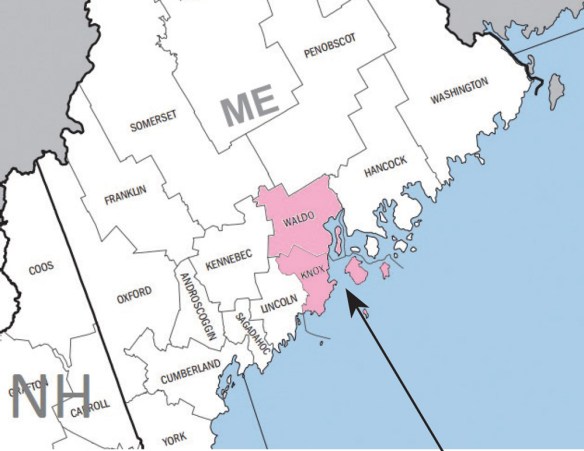
The Waldon Patent included today's Waldo and Knox counties.

The Waldon Patent included today’s Waldo and Knox counties on Penobscot Bay.

Samuel’s daughter Hannah Waldo married Thomas Flucker – Henry Knox’s in-laws and my 6x-great grandparents.
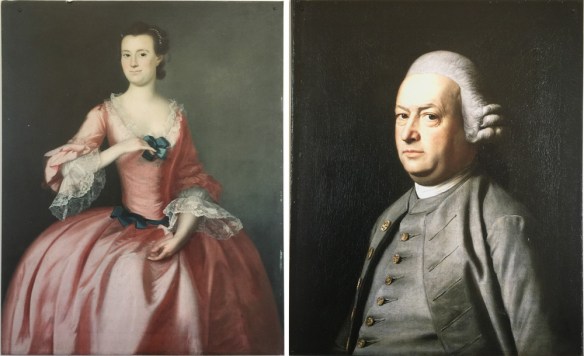
Hannah Waldo Flucker and Thomas Flucker. The Original paintings hang in Boudoin College along with a painting of Hannah's father, Samuel Waldo.

Hannah Waldo Flucker and Thomas Flucker. The Original paintings hang in Boudoin College along with a painting of Hannah’s father, Samuel Waldo.

Thomas Flucker was a Tory when revolution broke out in Boston. He served as the Secretary of the Province of Massachusetts. He and Hannah were pretty shaken up when their daughter Lucy fell in love with a rebel. But they did consent to the marriage. When Henry’s guns chased the British out of Boston, Thomas and Hannah sailed to Halifax with the British, never to see their daughter again. They also lost their rights to the Waldo Patent. After the war, Henry was able to work with the US government to obtain the lands back. Then he and Lucy built Montpelier.

In the 1930s, the Henry Knox Chapter of the DAR gathered enough money to build the new replica that is now the museum.

Today's Henry Knox Mansion, Montpelier.

Today’s Henry Knox Mansion, Montpelier.

It is about a quarter mile north of the original. In the next photo, I am standing where the old house was. You can see the museum in the distance.

View of the Henry Knox Museum Montpelier from the beach that was in front of the old Knox Mansion.

View of the Henry Knox Museum, Montpelier. from the beach that was in front of the old Knox Mansion.

When I arrived at the museum, Bailey, one of the delightful docents, gave me a tour. She showed me the paintings of my 6x great grandparents Thomas and Hannah (Waldo) Flucker (above). She showed me many paintings of Henry but no paintings of his wife Lucy because none exist, at least as far as anyone knows. Bailey guided me to a painting of Henry and Lucy’s daughter Lucy (my 4x-great grandmother, and one of only three of Henry and Lucy’s thirteen children who reach adulthood). I also saw Henry’s bed,

My 5x-great-grandfather Henry Knox's bed.

Henry Knox’s bed. Lucy had her own room.

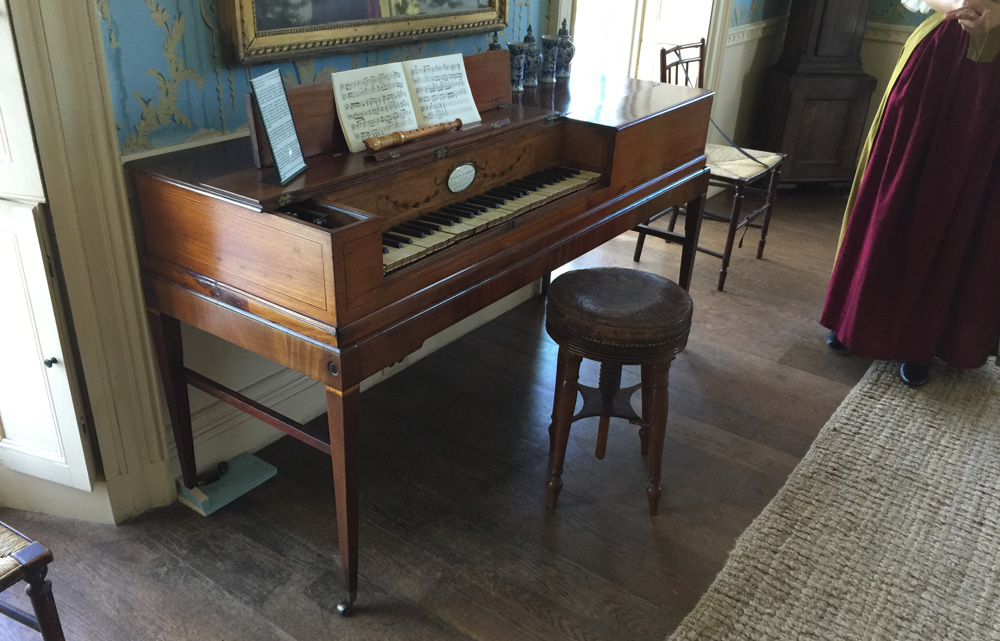
Lucy’s piano,
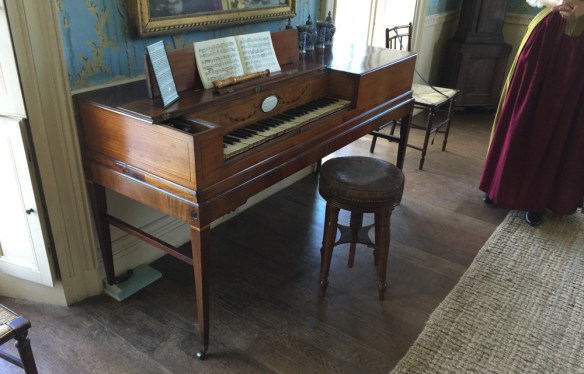
This piano belonged to either Lucy or her sister, Caroline. Either way, my 5x-great-grandmother probably played it.

This piano belonged to either Lucy or her sister, Caroline. Either way, my 5x-great-grandmother probably played it.

one of Henry’s many bookcases,
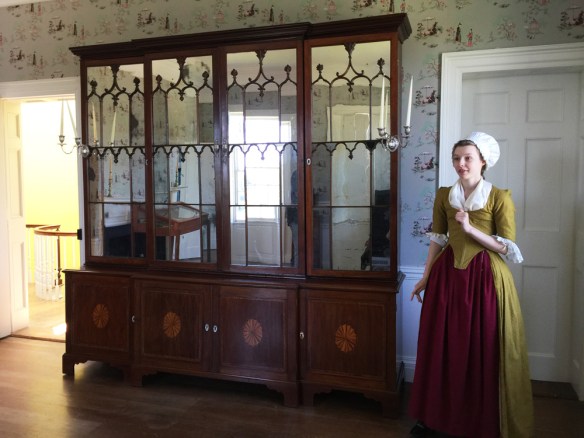
Henry Knox's bookcase.

Henry Knox’s bookcase.

and the oval room. This oval room is one of only two oval rooms built during that era — the other is in the White House. Henry built his first. Even the doors are shaped to fit the perfect oval. The room served as an entryway meant to impress visitors. On the wall is a painting of Henry. Another painting shows George Washington’s first cabinet. Henry was the first Secretary of War. He served with Thomas Jefferson, Alexander Hamilton, Edmond Randolph, and of course, George.

The oval room in the Henry Knox Museum.

The oval room in the Henry Knox Museum.

Among his many talents, Henry was a brilliant engineer. He designed this stairway that is supported only by the arches.
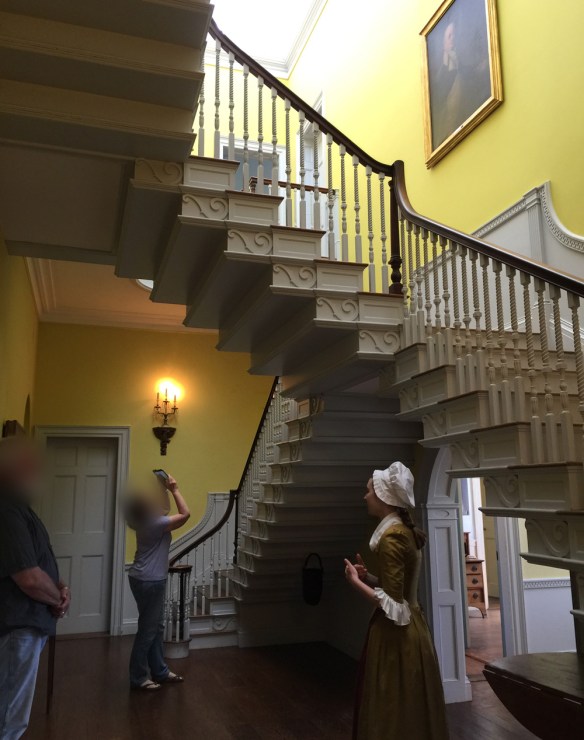
The central stairway in the Henry Knox Museum designed by Henry himself.

The central stairway in the Henry Knox Museum designed by Henry himself.

Just up the road from the museum, Haven and I found the cemetery where Henry and his family are buried. The names of Henry’s wife and children cover the faces of all sides of the monument. Only Henry’s name has been preserved so you can still read it easily.
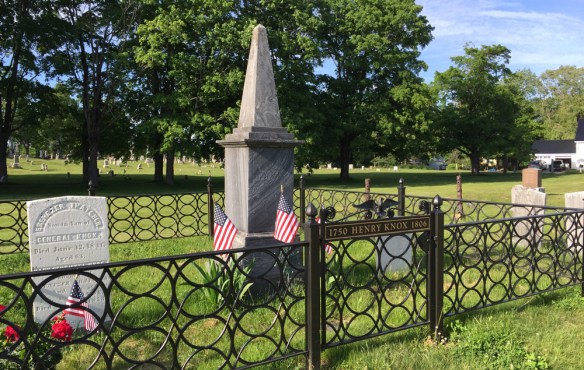
Graves and monument for Henry Knox and his family.

Graves and monument for Henry Knox and his family.

Henry’s daughter Lucy’s husband, Ebenezer Thatcher (my 4x great grandfather) has his own stone with one of Lucy’s daughters, Mary Henrietta (who married a Hyde).

Ebenezer Thatcher's gravestone.

My 4x-great-grandfather Ebenezer Thatcher’s gravestone.

Thanks so much to Director Matt Hansbury, the museum’s board and docents Sarah, Lindsay, and Bailey. Lindsay also helped with the video.

And thanks to my friend Jane Dimitry for trekking the three hours each way from Boston to join me.

Added attractions for the weekend were lobster rolls at McLoons in Rockland.
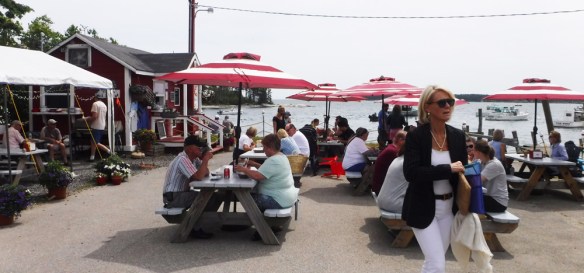
Cousin Haven outside McLoon's restaurant in Rockland.

Cousin Haven outside McLoon’s restaurant in Rockland.

And on the route between Boston and Thomaston, I stopped to shop at my favorite store, LLBean.

LLBean in Freeport, Maine.
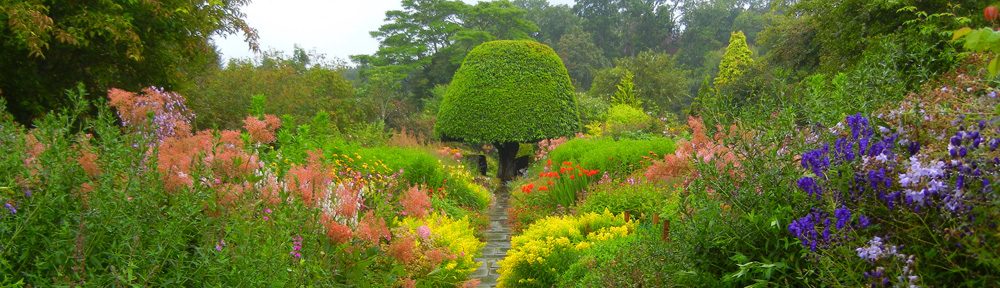
LLBean in Freeport, Maine.

The Henry Knox Trail – From Albany NY to Westfield MA

The difference between telling stories about Henry Knox to friends in California and following his journey in New York and Massachusetts is that here in New York and Massachusetts, people care about Knox. They name businesses after him.

The Knox Trail Lodge near Otis, Massachusetts

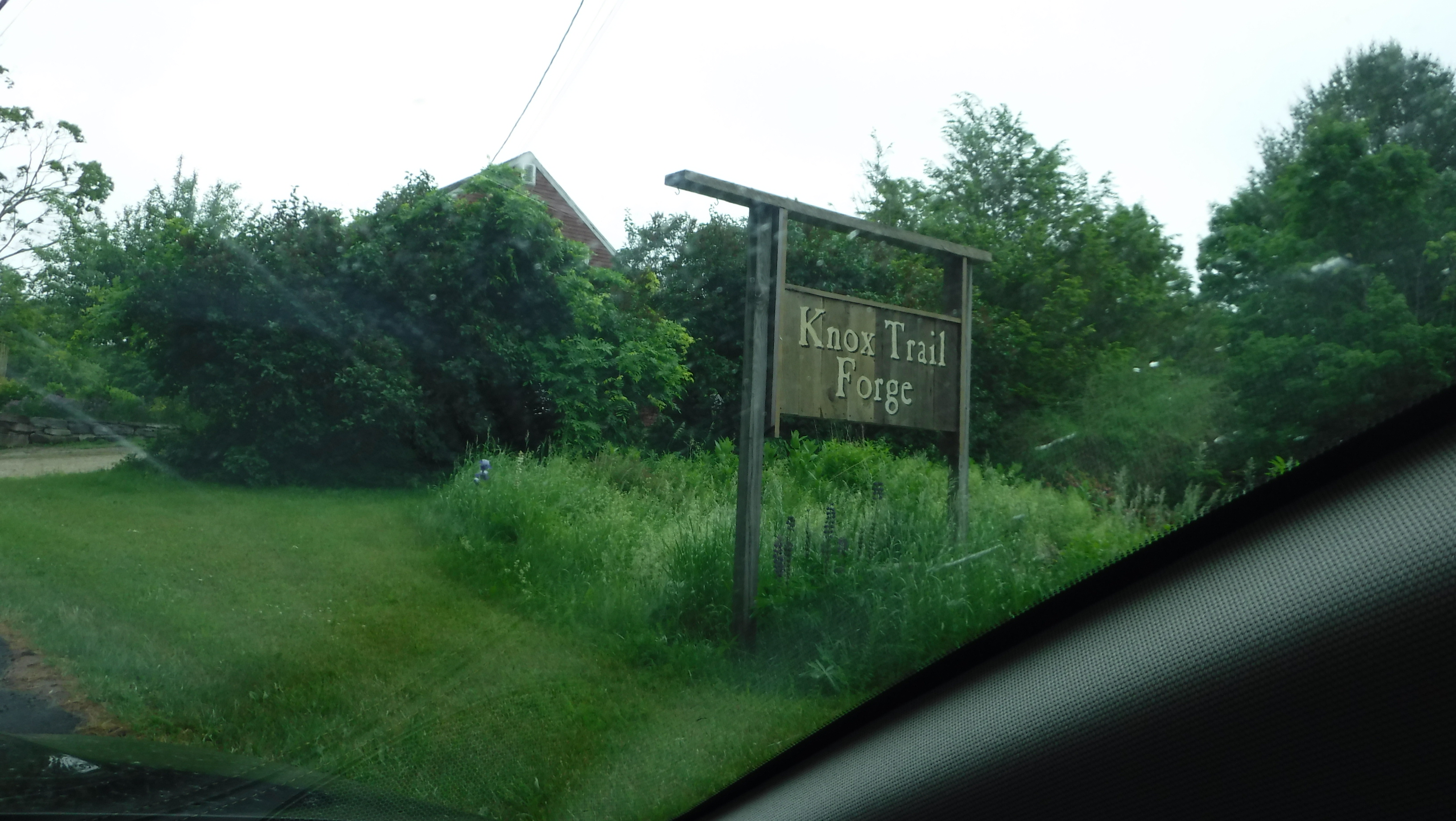
The Knox Trail Forge near Otis, Massachusetts

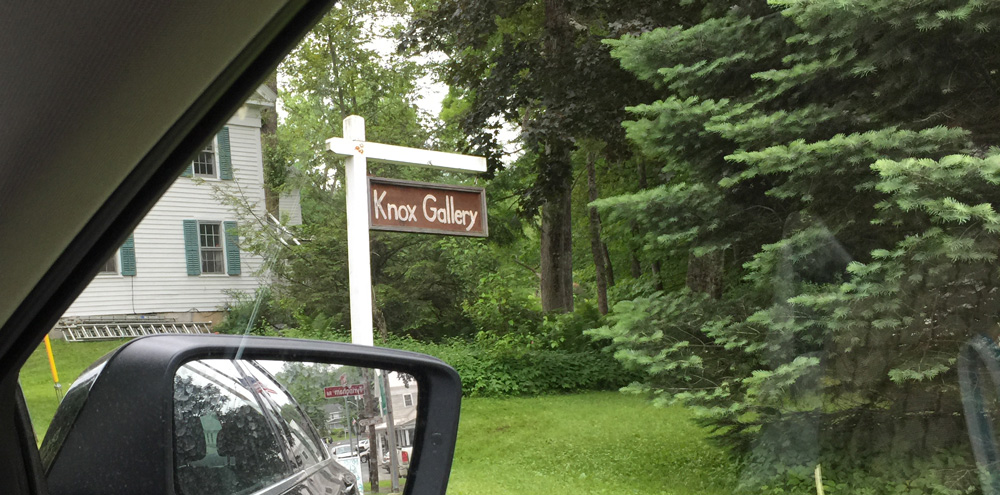
They name art galleries after him.

Knox Art Gallery in Monterey, Massachusetts, along the Henry Knox Trail.

Knox Art Gallery in Monterey, Massachusetts along the Henry Knox Trail.

They name roads after him.

Street Sign for General Knox Road near Blandford, Massachusetts

Street Sign for General Knox Road near Blandford, Massachusetts

On Wednesday, I made it to Massachusetts Marker No. 7 before I needed to head to Maine, where I will give another book performance this coming Saturday, June 16.

Map of Markers on the Henry Knox Trail from Albany NY to Westfield MA

Map of Markers on the Henry Knox Trail from Albany NY to Westfield MA

It really is fun driving through the New York and Massachusetts countrysides searching for markers. A historical treasure hunt. I highly recommend it. But two days aren’t enough. I will finish when I return to New England in September for my niece’s wedding.

It was a rainy morning, so the photos are a bit dark.

I found New York Marker No. 24 in front of a church in East Greenbush on Route 20. It was up the road from Marker No. 23. The Hudson Valley Institute Guide stated that the stone and brass plaque indicates the continuation of the route east from where the Train of Artillery landed at the east side of the Hudson River opposite Albany.

Marker No. NY24 of the Henry Knox Trail in East Greenbush, New York

Marker No. NY24 of the Henry Knox Trail in East Greenbush, New York

Marker No. 25 stands in Schodack at a ‘Y’ in the road where Route 9 breaks away from Route 20. Knox came to the same junction in the road. He turned south (continuing on Route 20) on January 9, 1776. The artillery sleds followed later.

Marker No. NY26 of the Henry Knox Trail in Shodack, New York

Marker No. NY25 of the Henry Knox Trail in Schodack, New York

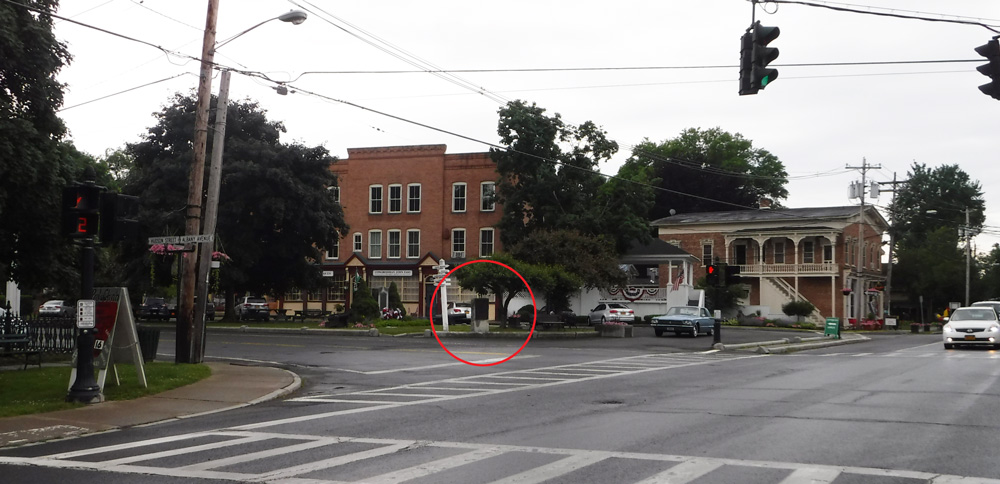
Marker No. 26 stands in the central square of a cute little town south of Schodack called Kinderhook . “This marks a turning of the old road to the east side of Kinderhook Creek.”

Marker No. NY26 of the Henry Knox Trail in Kinderhook, New York

Marker No. NY26 of the Henry Knox Trail in Kinderhook, New York

A pretty barn on the road past Kinderhook

A pretty barn on the road past Kinderhook

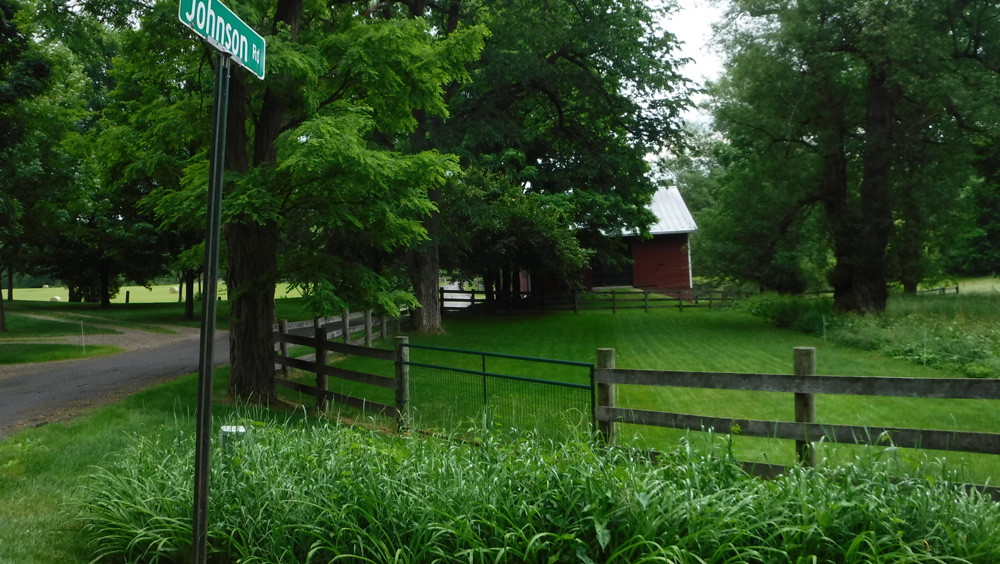
During the second week of January, Knox turned southeast on a road near today’s Routes 66 and 9. Marker No. 27 is on the lawn of a house on the corner of Route 66 and Snyder Road close to the village of West Ghent. Crossing Route 66, Snyder Road becomes Cemetery Road.

New York Marker No. 28 was only three miles away. To reach it, I continued southeast on Cemetery Road toward Harlemville. I passed more gorgeous farms. The marker stands on the corner of Taconic State Parkway and Harlemville Road. Very near there is Loudon Road. I wondered if it was an extension of the same Loudon Road I was following for a while in Albany.

Marker No. NY28of the Henry Knox Trail at the corner of Harlemville Road and Taconic State Parkway

Marker No. NY28 of the Henry Knox Trail at the corner of Harlemville Road and Taconic State Parkway

A beautiful farm near Harlemville.

A beautiful farm near Harlemville.

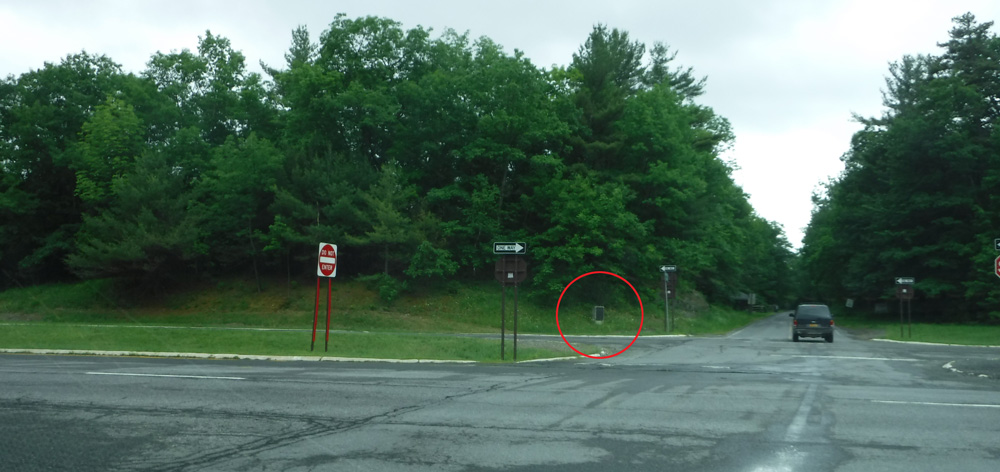
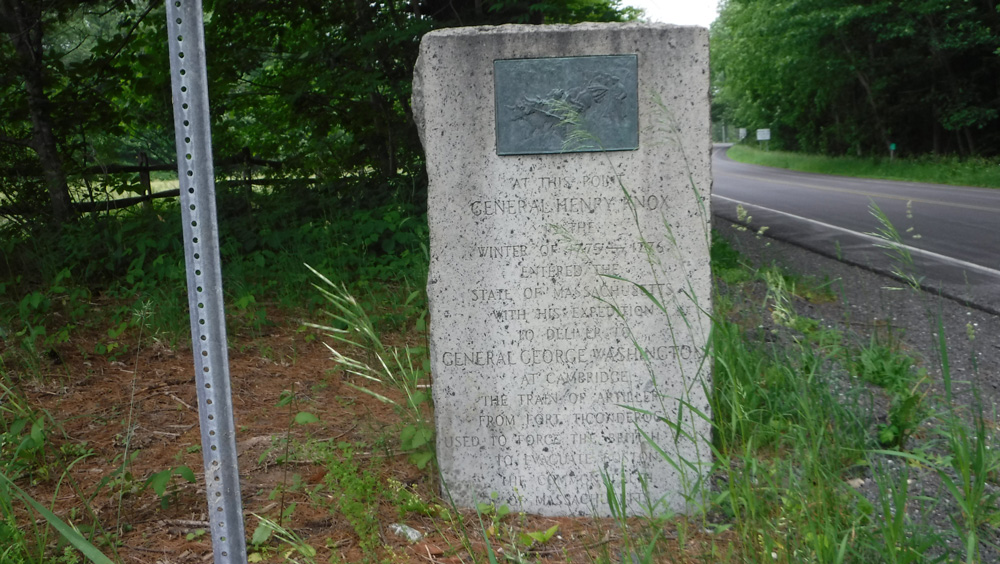
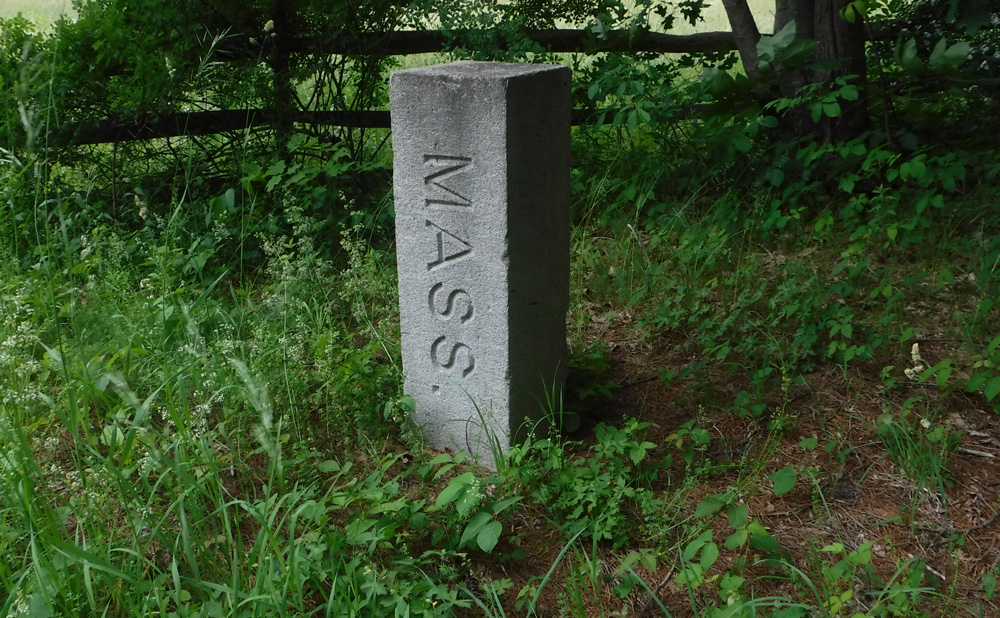
Still the second week of January, Knox reached the point where Marker No. 29 stands on a triangle of grass between Route 21 and 71. I proceeded along 71 as it crossed the state border. A sign for Alford lets you know you are crossing into Massachusetts. The trail marker stands below the sign. The brass plaque on the New York side of the granite marker is the same style we have been seeing up to now. Walking around to the other side of the marker, you see, for the first time, a plaque with the style designed for the Massachusetts markers.

Marker No. MY30 and MA1 of the Henry Knox Trail on the state border between New York and Massachusetts

Marker No. NY30 and MA1 of the Henry Knox Trail on the state border between New York and Massachusetts

The Massachusetts side of the marker on the state line. MA1 of the Henry Knox Trail

The Massachusetts side of the marker on the state line. MA1 of the Henry Knox Trail

A post hiding behind the marker confirms that you are on the state line. Notice how it faces a different direction from the marker.

Post denoting state line between New York and Massachusetts - New York Side

The New York side of the post denoting the state line between New York and Massachusetts.

Post denoting state line between New York and Massachusetts - Massachusetts Side

The Massachusetts side of the post denoting the state line between New York and Massachusetts

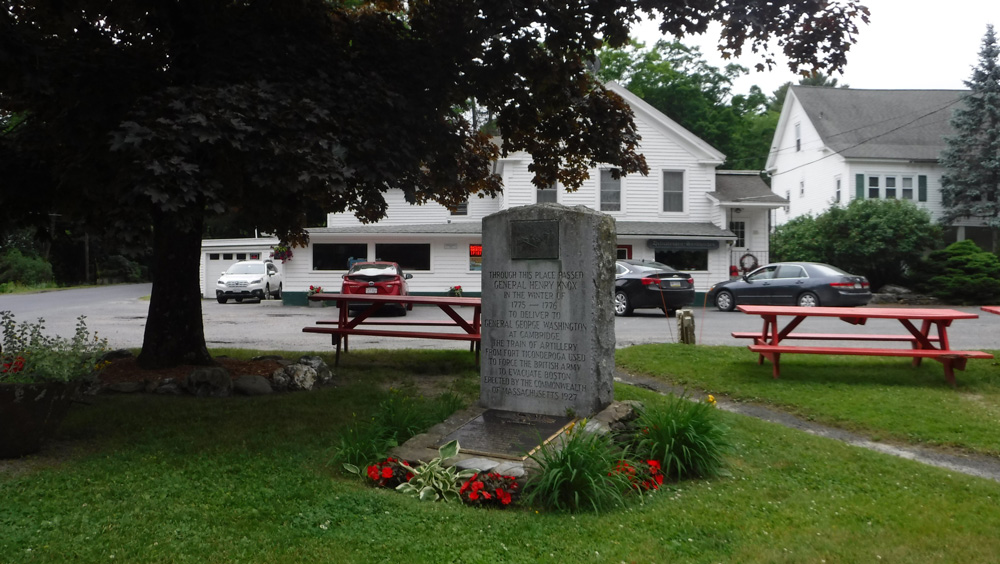
People in East Egremont, Massachusetts, are very proud of their Henry Knox Trail marker. It stands in front of the general store and is decorated with flowers. Another plaque at the base dedicates the monument to everyone who has died for their country, including victims of 9/11.

Marker MA2 of the Henry Knox Trail in East Egremont, Massachusetts

Marker MA2 of the Henry Knox Trail in East Egremont, Massachusetts

The proprietor of the general store told me that the building to the east used to be a tavern and inn. Henry Knox and his men stopped there for refreshment on their way through town.

Old inn in Egremont, Massachusetts, where Knox and his men stopped for refreshment on their way through town.

Old inn in Egremont, Massachusetts, where Knox and his men stopped for refreshment on their way through the village.

Over very hilly lands, the train forged eastward through Great Barrington noted by Marker No. MA3 at the north side of town.

Marker No. MA3 of the Henry Knox Trail ialong Route 23 in Great Barrington, Massachusetts

Marker No. MA3 of the Henry Knox Trail beside Route 23 in Great Barrington, Massachusetts

In the middle of the mountains, the route passes through another adorable village, Monterey. Marker No. MA4 is at the north end of town. As I did for the library in Hudson Falls, I stopped at the library across the street to obtain an address from the librarian so that I can send him a donated copy of Henry’s Big Kaboom. The librarian’s assistants were very excited about their trail marker. In Hudson Falls, the librarian didn’t know why there was a maker on the library’s front lawn. It is time to put the Henry Knox Trail back on people’s travel radar screens.

Marker No. MA4 of the Henry Knox Trail in Monterey, Massachusetts beside Route 23

Marker No. MA4 of the Henry Knox Trail in Monterey, Massachusetts beside Route 23

Monterey Public Library where I will be sending a copy of Henry's Big Kaboom.

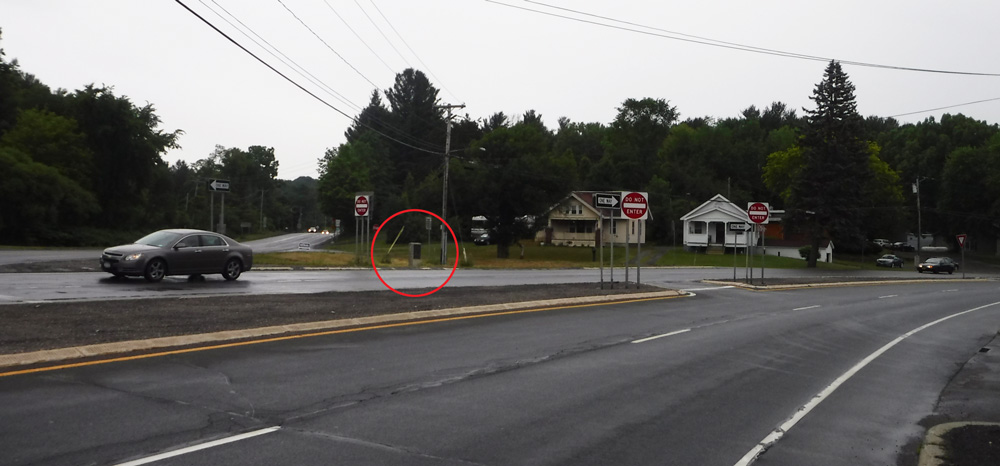
Monterey Public Library where I will be sending a copy of Henry’s Big Kaboom. (The blue circle on the left is a statue, not one of my circles showing the location of a marker.)

Still heading east on Route 23, the route passed through another cute mountain village called Otis. But the marker isn’t in town. It is tucked among the bushes alongside Route 23 about ten or so miles farther up the road. The position of the marker looks nothing like the photo in the guide, which places it by buildings. Maybe the marker was moved after the guide was published. To add to the confusion. the map on the guilde shows the marker near the intersection of Gibbs Road and Route 23. There are two intersections of Gibbs Road about eight miles apart. I nearly gave up on this one.

Marker No. MA5 east of Otic on the south side of Route 23

Marker No. MA5 east of Otis on the south side of Route 23

After passing through the tiny hamlet of Blandford with nothing more than a general store and a post office, the route turns right on General Knox Road. Three miles up the hill, I spotted Marker No. MA6 hiding behind a road work sign.

Marker No. MA6 of the Henry Knox Trail in Blanford on General Knox Road

Marker No. MA6 of the Henry Knox Trail in Blandford on General Knox Road

Following today’s Route 20, the route next passes through the relatively large city of Westfield near Worchester, Mass. You have to be on the lookout for the marker as you turn the corner of Main Street. The marker faces inward toward the sidewalk, not at the street like the other markers do. This allows pedestrians to read it, which is handy.

Marker No. MA7 of the Henry Knox Trail on Main Street in Westfield, Massachusetts

Marker No. MA7 of the Henry Knox Trail on Main Street in Westfield, Massachusetts

A block down Main Street, I filled my rental with gas. Then I retraced my tracks north to find the Mass Pike and head to Maine. As I said, I will continue this journey in September. My next post will be about my time in Thomaston, Maine, where Henry Knox spent his later years.